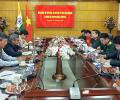
The 15th India-Vietnam Defence Dialogue signalled a move from routine talks to deeper cooperation, with new deals on submarine rescue and defence industry to support stability in the Indo-Pacific, notes Dr Rajaram Panda.

India and Vietnam on Tuesday decided to ramp up their defence and security ties that will see supply of four naval patrol vessels to Hanoi and increased training of its military personnel, a month after India extended USD 100 million Line of Credit for defence procurement.

The memorandum of understanding on mutual logistics support is the first such major agreement that Vietnam has signed with any country.
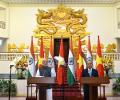
India on Saturday extended $500 million (Rs 3,328 crore) Line of Credit to Vietnam for facilitating deeper defence cooperation with the south east Asian nation, as the two countries elevated their ties to a Comprehensive Strategic Partnership to respond to emerging regional challenges.
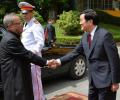
India and Vietnam on Monday inked seven pacts, including one to enhance cooperation in the strategic oil sector, as they called for "freedom" of navigation in the South China Sea, a remark which could irk China, which has been claiming territorial sovereignty over the high seas.
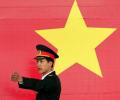
Modi's Vietnam visit is timely and crucial for several reasons. First, Vietnam lies at the heart of India's vision for Southeast Asia as also its 'Act East' policy. India also wants to boost its defence exports to friendly countries. And it is looking to increase trade between the two countries will now is only $7.83 billion, says Dr Rahul Mishra.

Vietnam is a key player in India's act east policy under Prime Minister Narendra Modi. From India's perspective, a strategic partnership with Vietnam will only deepen political, economic, and security ties and be a bulwark against China, say Melissa S Hersh and Dr Ajey Lele
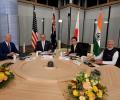
Saturday's Quad meeting in Delaware is taking place against the backdrop of China's assertive behaviour in the South China Sea, its sabre-rattling in the Taiwan Strait and increasing footprints in the Pacific and Indian Ocean, asserts Rup Narayan Das.
New Delhi is quietly reclaiming its space in Asia by forging alliances with China's neighbours. In a way, India is converting its much-talked about Act East Policy to Engage East practice.

Had India agreed to join the trade pact, Indian markets would have been flooded with cheap Chinese products.

This is the first time an Indian shipyard has been commissioned to design and build a warship to specifications formulated by a buyer country. This marks an important first landmark in the Bharatiya Janata Party-led government's drive to increase defence exports.
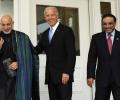
US-Pakistan relations are poised to touch a qualitatively new level under the Biden administration, notes Ambassador M K Bhadrakumar.
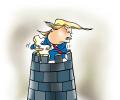
Like Mr Trump, says Kanika Datta, politics tempts many businessmen.

India and China met and spoke a lot this year, but failed to produce any meaningful results.
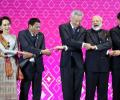
The prime minister also welcomed convergence of views between India and ASEAN for cooperation in the Indo-Pacific region.

Summary of World Cup qualifiers played across the world on Thursday

An international tribunal in the Hague has ruled in favour of the Philippines.

Indians want change and progress. They should be willing to accept tough decisions, says Sanjeev Nayyar.


'The creation of Pakistan was integral to Britain's grand strategy.' 'If they were to ever leave India, Britain's military planners had made it clear that they needed to retain a foothold in the NWFP and Baluchistan because that would provide the means to retain control of Iran, Iraq, Kuwait, the UAE, Bahrain and Qatar.'

There is speculation that China released the White Paper on Tibet in a hurry after a Spanish court agreed to hear charges of genocide against former Chinese president Hu Jintao. Ajai Shukla reports


With EU, it is part of the FTA that we will need to negotiate.

Indian economy about to take-off
 © 2026 Rediff.com - Investor Information - Advertise with us - Disclaimer - Privacy Policy - Sitemap - Feedback - About us - Terms of use - Grievances